
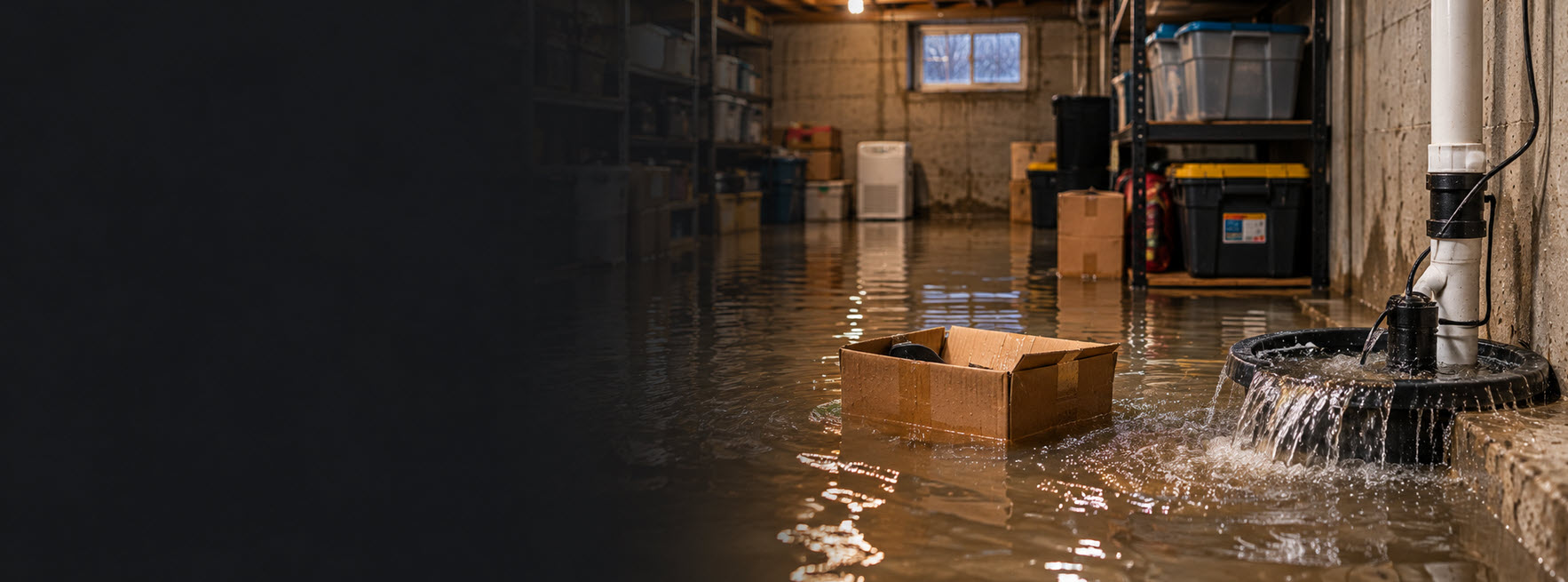
Wet Basement Repair in Milwaukee & the Suburbs
Water on the Floor? Let's Find Out Why.
Puddles after storms, damp carpet along the walls or a musty smell that won't quit. Basement Specialists traces the water to where it's actually getting in and stops it there.
- Since 1981Locally owned & operated
- Free EstimatesWritten & no-pressure
- Warranty BackedUp to 20 years
- Licensed & InsuredFully bonded
- 4.7 Stars on GoogleFrom local homeowners
Wet & Leaky Basements
Every Wet Basement Has a Reason
A wet basement isn't bad luck. Water gets in because something outside or under your house is sending it there. In the Milwaukee area, it's usually several things at once: clay soil that holds rain against the walls, groundwater that rises after storms and drain tile that stopped working years ago.
Where the water shows up tells us a lot. A puddle under one crack is different from a wet line all the way around the floor, and both are different from water dripping in around a window. Each one points to a different entry path, and each needs a different fix.
That's why we start every wet basement call by tracing the water, not by selling a system. Once we know exactly how it's getting in, we'll recommend the repair that actually stops it and put it in a written estimate.
How Water Gets In
Three Common Ways Water Gets Into a Basement
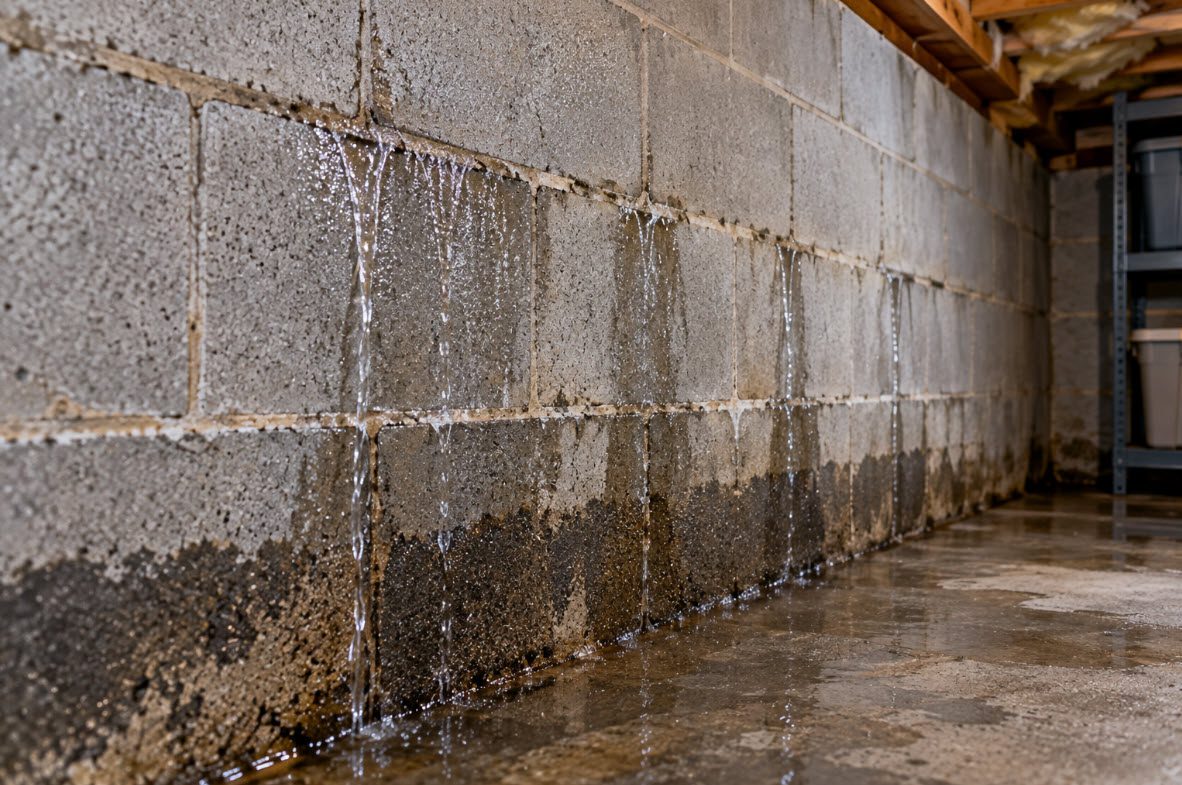
Saturated soil pushes water through cracks in poured and block walls, leaving wet streaks below. See leaking walls.
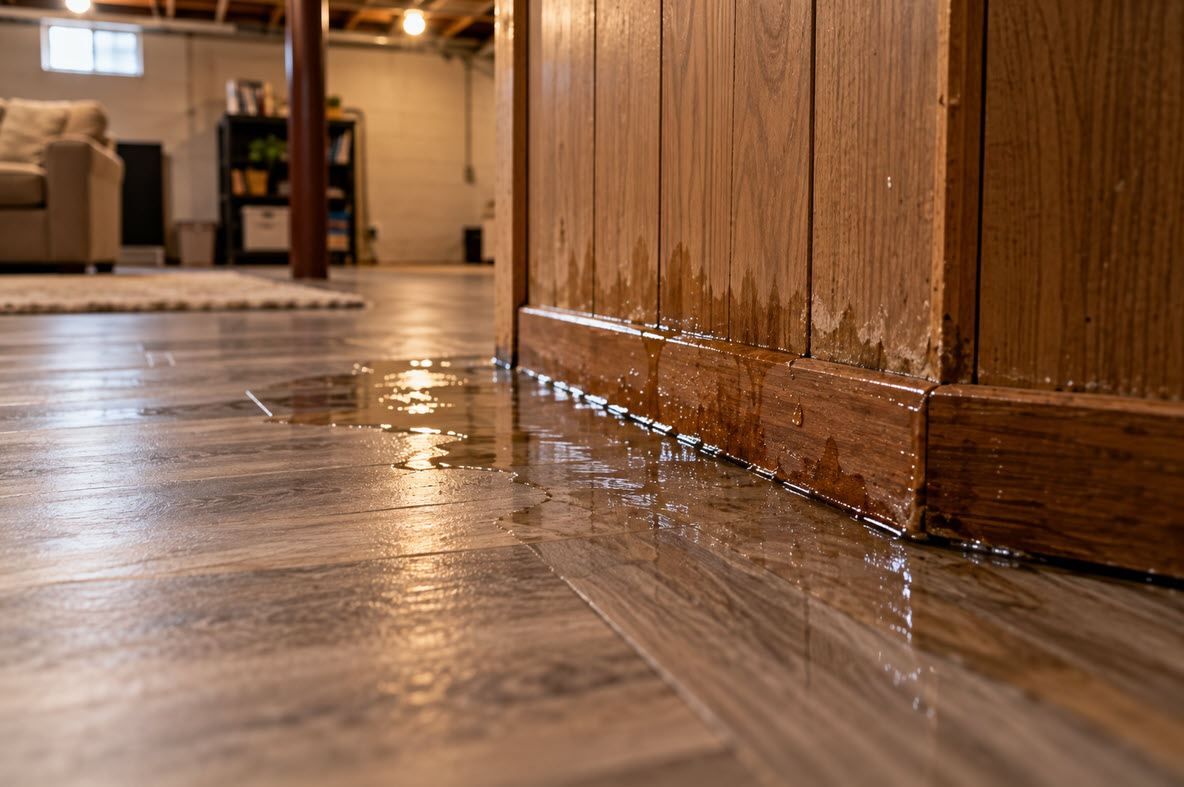
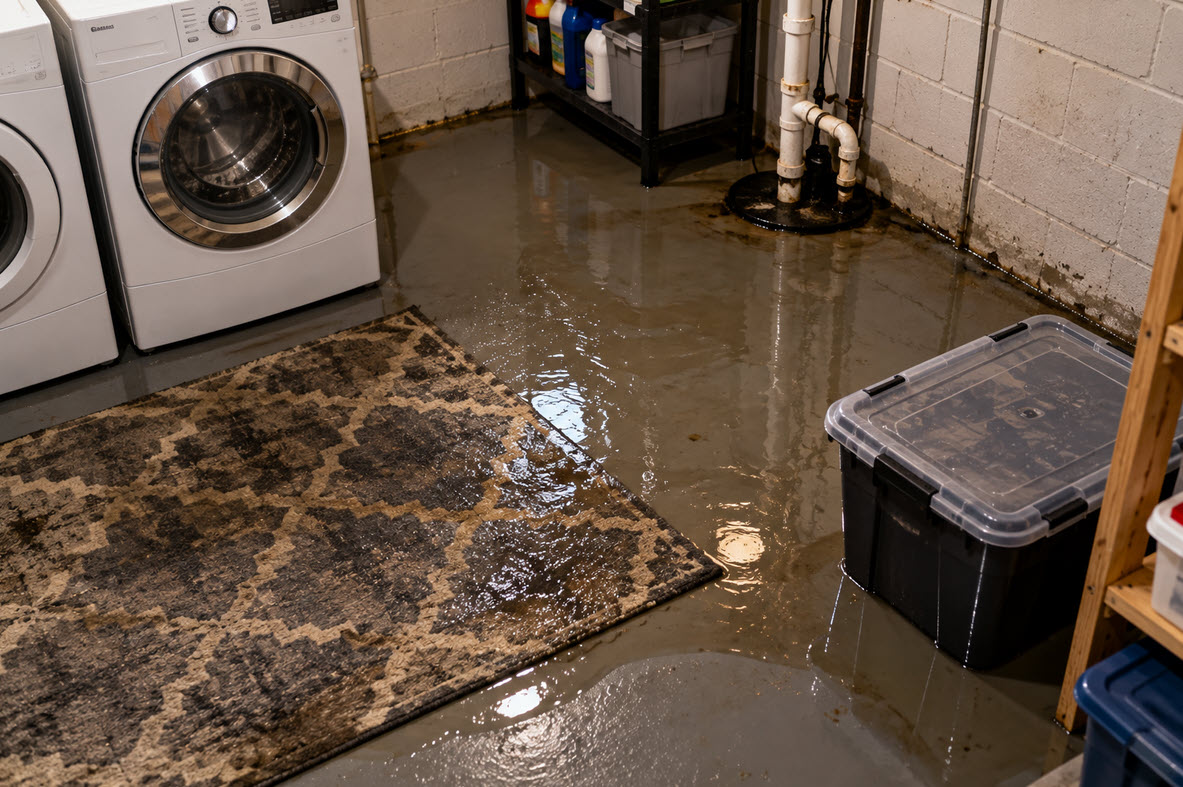
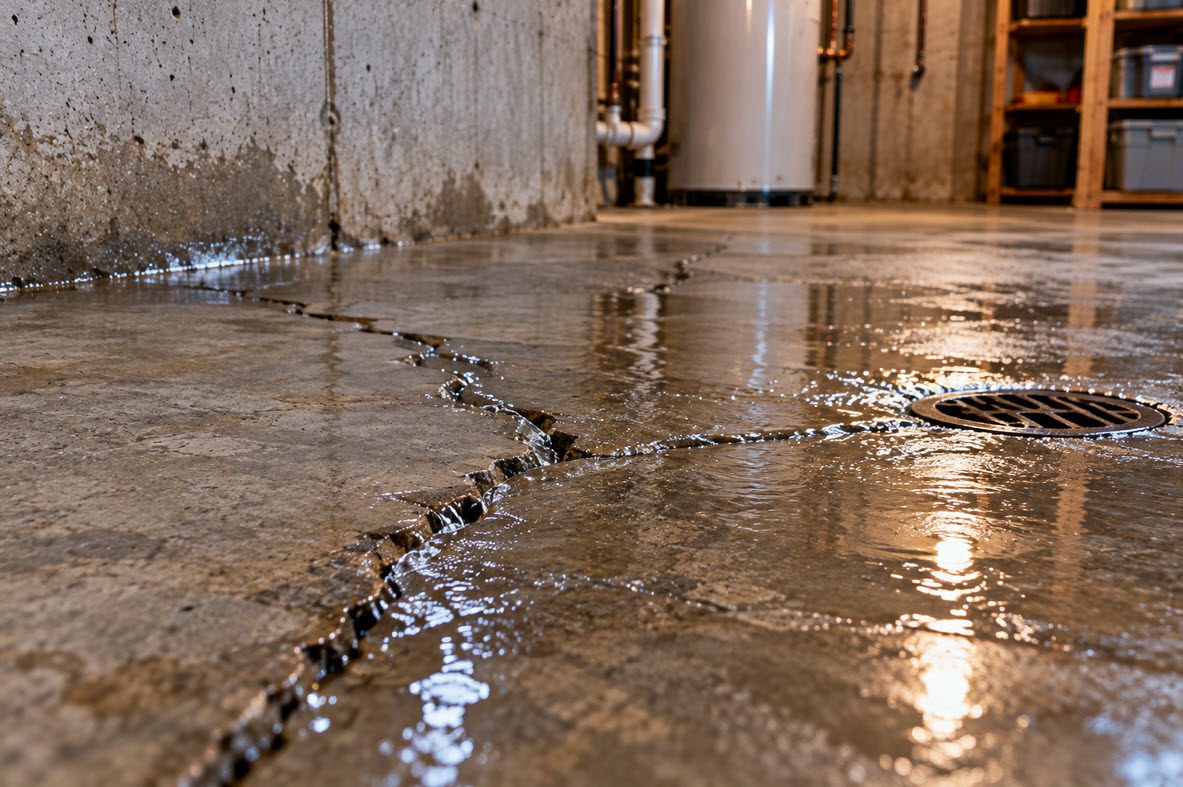
Water that appears around the edge of the floor is coming up from below. See floor seepage.
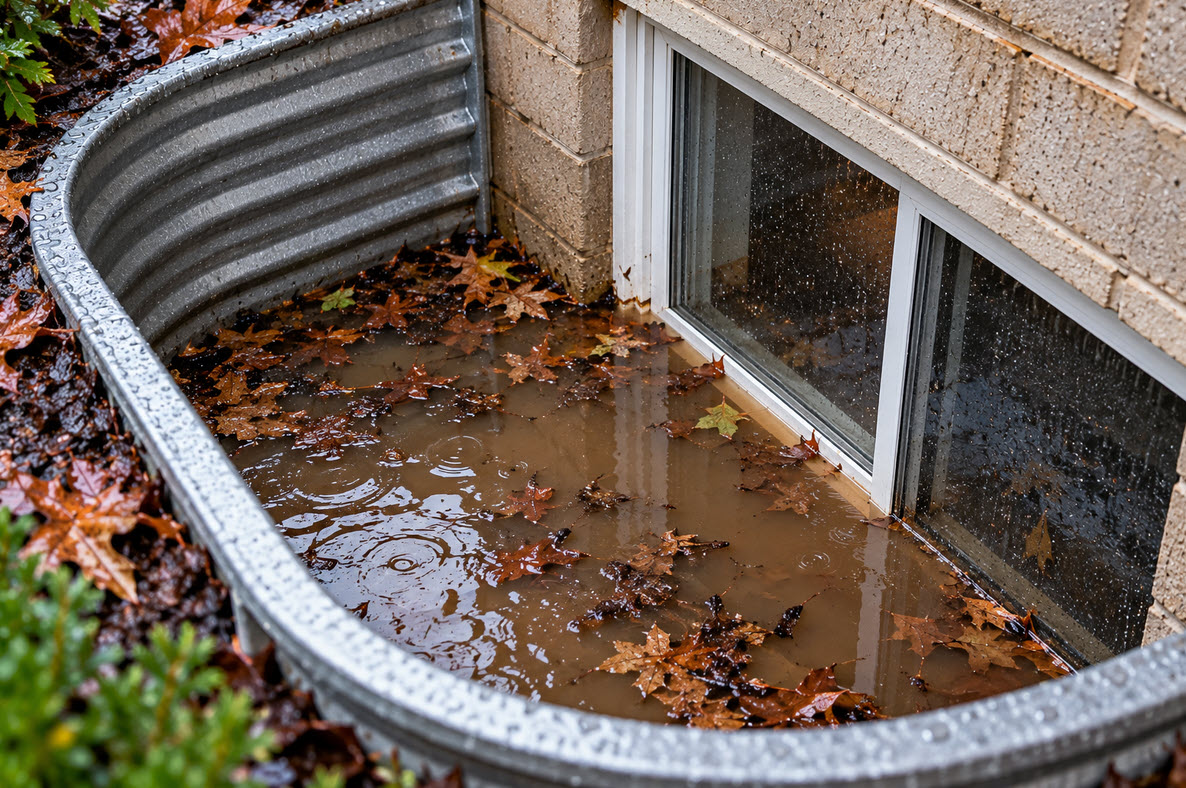
Window wells that can't drain fill up and pour water in around the frame. See window wells.
What Causes It
Why Milwaukee Basements Get Wet
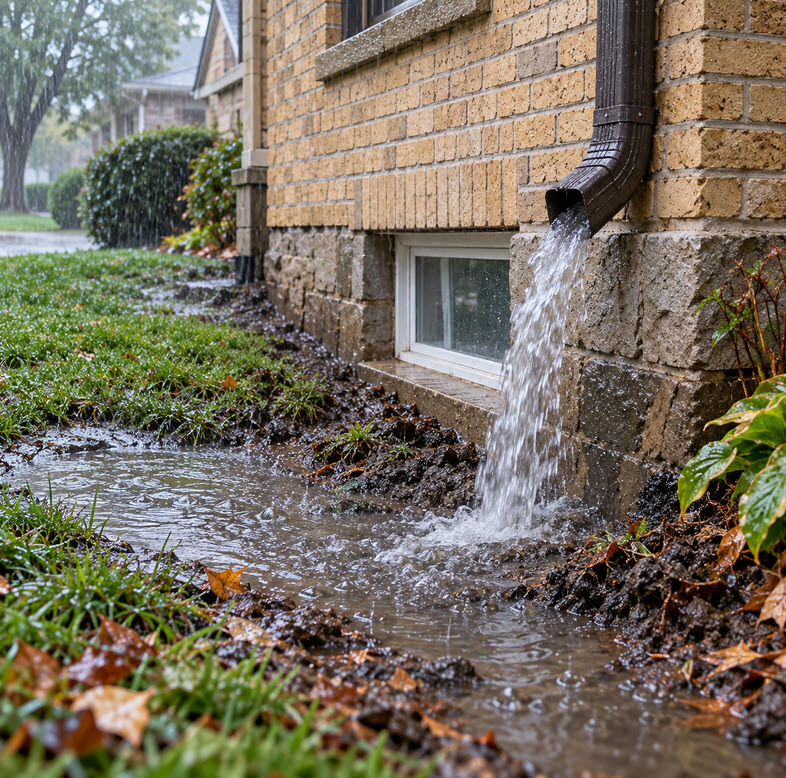
It almost always comes back to soil, groundwater and drainage.
Warning Signs
Signs of a Water Problem
Some of these show up only after big storms. If you're seeing more than one, water is finding its way in.
- Puddles after rain or snowmelt
- Damp carpet near the walls
- A wet line at the floor edge
- Water stains on walls
- White, chalky residue
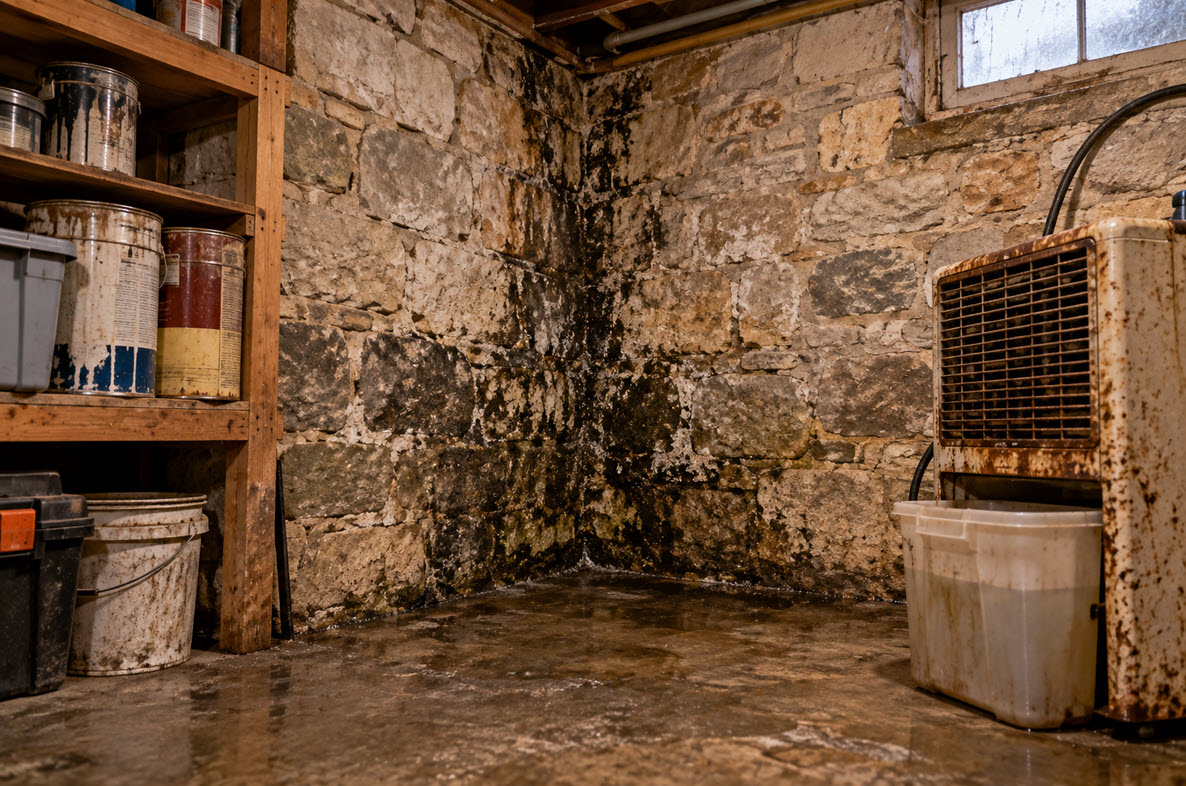
- Musty smells or mildew
- A sump that runs constantly
- Peeling paint on walls
How We Fix It
Wet Basement Repair Options
 Interior
 Drain Tile & Sump
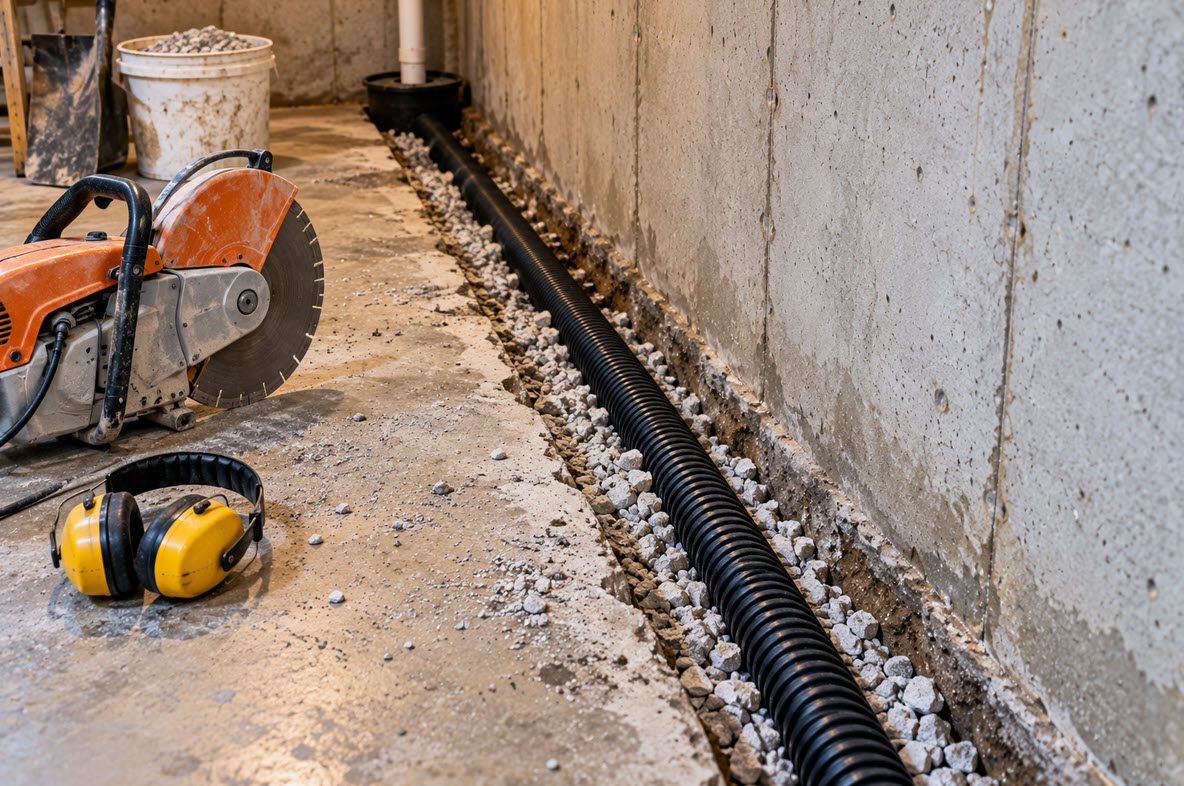
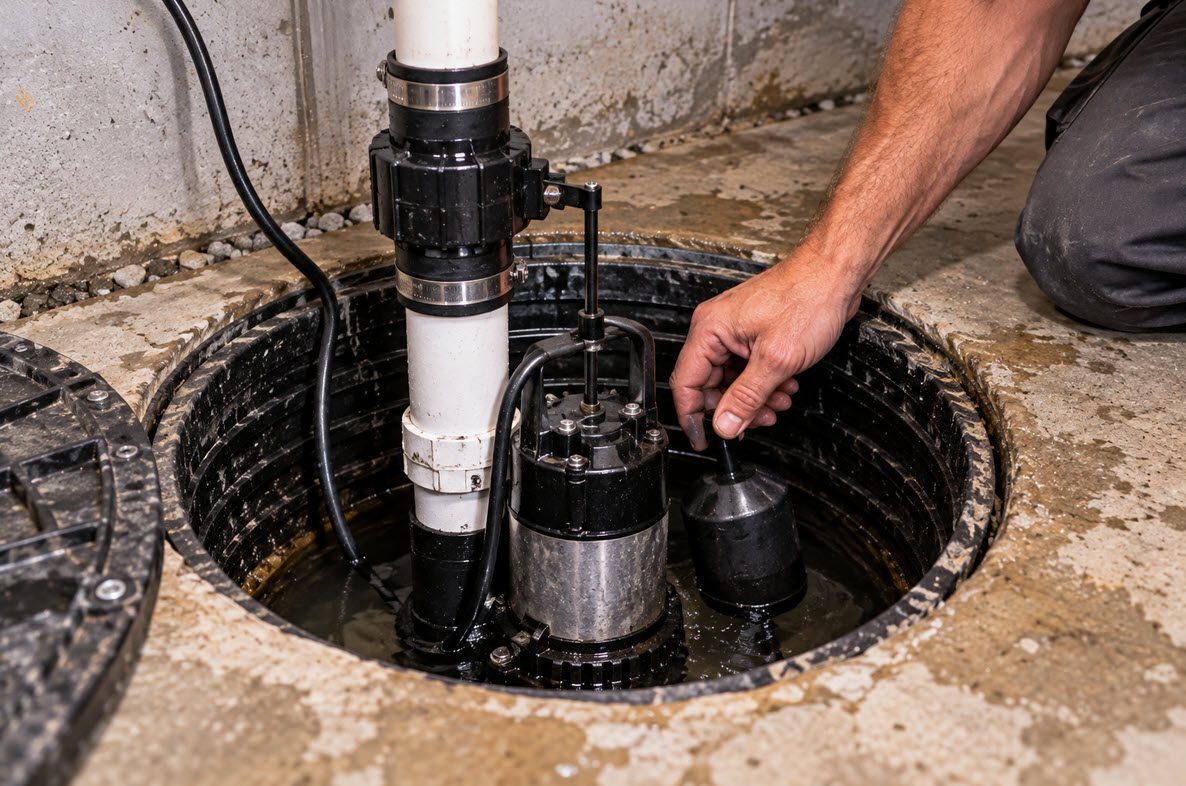
For most wet basements, the most reliable fix is an interior drainage system. We cut a narrow trench along the inside edge of the floor, set new perforated drain tile in clean stone at the footing and connect it to a sump pump that sends the water outside.
Because it relieves the pressure under the floor and along the base of the walls, the water stops instead of simply moving somewhere new. It's all done from inside the basement, so your lawn, landscaping and driveway stay untouched.
When we're done, the trench is patched with fresh concrete and the work area is cleaned up. Most homeowners are surprised how quickly the basement goes from wet after every storm to dry and usable.
Drain Tile Details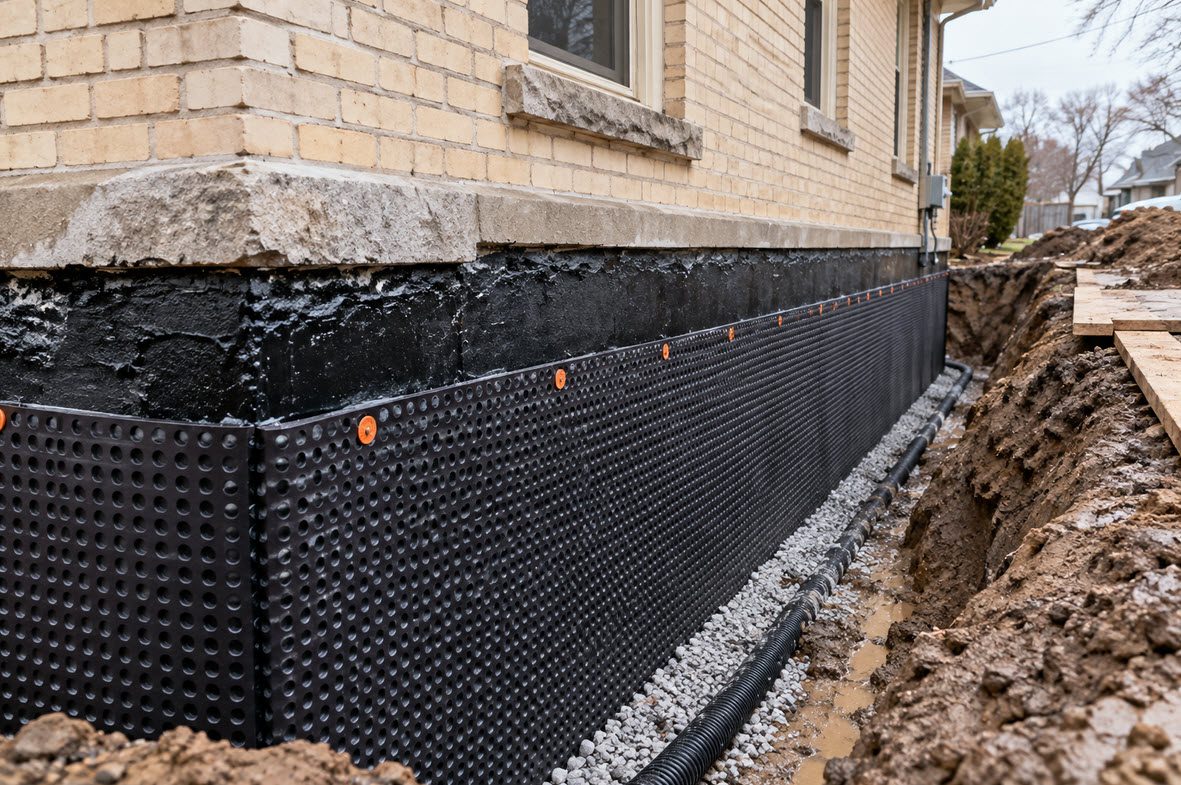 Targeted
 Repairs & Exterior Work
Sometimes the fix is more focused. A single leaking crack can be sealed, gaps around pipes can be closed, a window well can be rebuilt with a real drain and downspouts can be extended so roof water stops landing at the foundation.
When leaks are widespread, or a wall is being dug out for structural repair anyway, exterior waterproofing stops water before it ever reaches the foundation. We excavate along the wall, repair it, apply a waterproofing membrane and add new drainage at the footing.
We'll walk you through which approach fits your home and why, so you're not paying for more than you need or less than will actually work.
Exterior WaterproofingWhat to Expect
Our Wet Basement Process
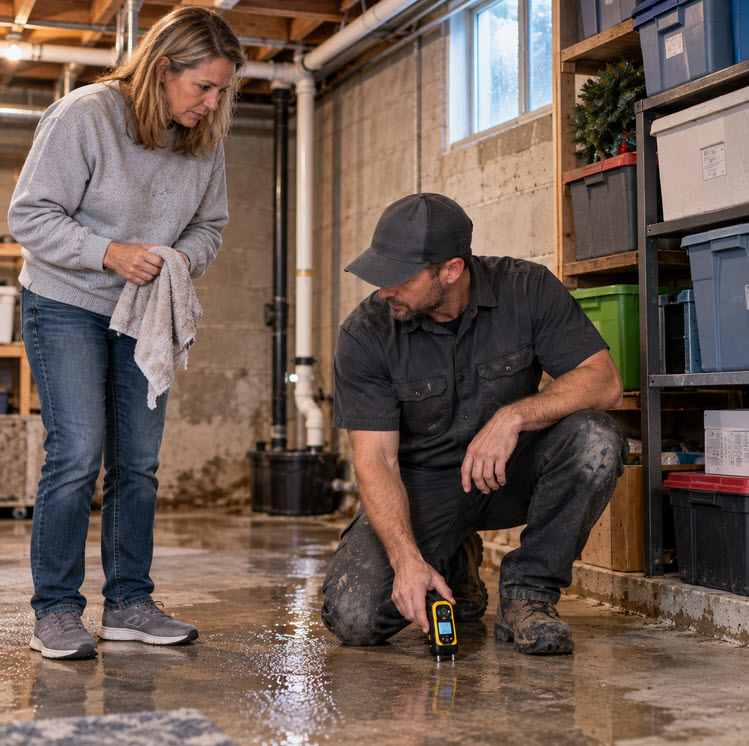
- 1Trace the WaterWe find exactly where and how water is getting in.
- 2Check the DrainageWe look at your sump, drain tile, downspouts and grading.
- 3Explain the FixA plain-English recommendation and a written estimate.
- 4Keep It DryWe install the solution and leave your basement clean.
Common Questions
Wet Basement FAQs
Why is my basement only wet in spring?
Snowmelt and spring rain saturate the ground at the same time, pushing groundwater to its highest level.
What should I do after my basement floods?
Move valuables, make sure your sump pump is running, clear gutters and dry the area. Then have the source checked.
Will a dehumidifier fix it?
It helps with humidity and odor, but it won't stop water from coming in.
Can I finish a basement that gets wet?
Fix the water first. Finishing over a water problem traps moisture and leads to mold.
Do downspouts really matter?
Yes. Water dumped at the foundation is one of the biggest causes of basement leaks.
Can you fix it without digging up my yard?
Usually. Interior drain tile, sump systems and crack sealing are all done from inside.
What Homeowners Say
Trusted by Milwaukee-Area Homeowners

“We had Basement Specialists do foundation work for us, they were affordable, completed the work in a timely manner, and did a great job at cleanup. We even had some extra work done around the porch foundation which was reasonable and looks great. We would highly recommend them!!”
“We have used Basement Specialists a couple of times. They have been simply wonderful to work with. To start with, the office is responsive, and they were easy to schedule with. Dale showed up promptly…”
“Just had them do foundation work for us. They did a good job, they did put runners down. Even put some on the basement steps, even after I told them they didn't have to…”
Related Services
You May Also Need
 Floor Seepage
 Sump Pumps & Backups

Wet After Every Storm?
Let's Keep Your Basement Dry.
We'll trace where the water is coming from and give you a free written estimate.