
Foundation Stabilization & Helical Piers in Milwaukee
Support Your Home From Solid Ground.
When the soil under your footing gives out, piers carry your home's weight down to firmer soil. Basement Specialists uses them to stop settling for good.
- Since 1981Locally owned & operated
- Free EstimatesWritten & no-pressure
- Warranty BackedUp to 20 years
- Licensed & InsuredFully bonded
- 4.7 Stars on GoogleFrom local homeowners
Foundation Stabilization
Going Around the Weak Soil
Most foundations rest on soil just a few feet below the surface. When that soil is loose fill, soft clay or washed out by water, it can't hold the house up evenly anymore, and part of the home starts to sink.
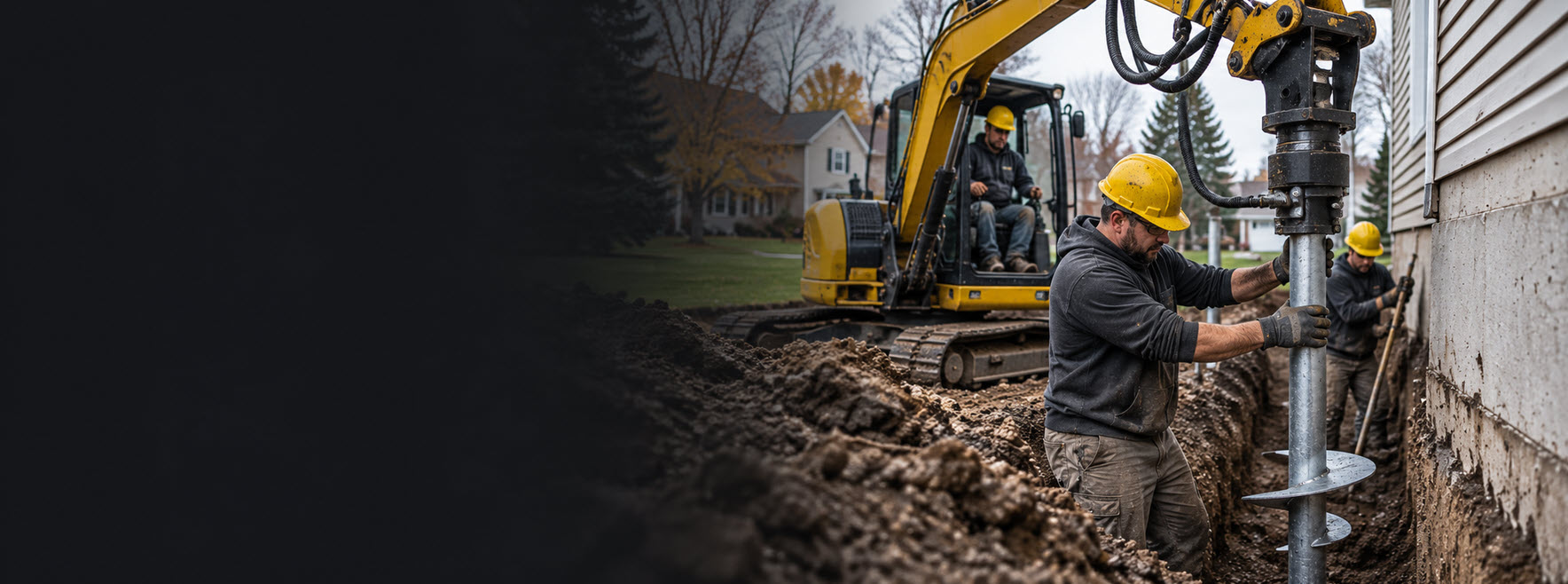
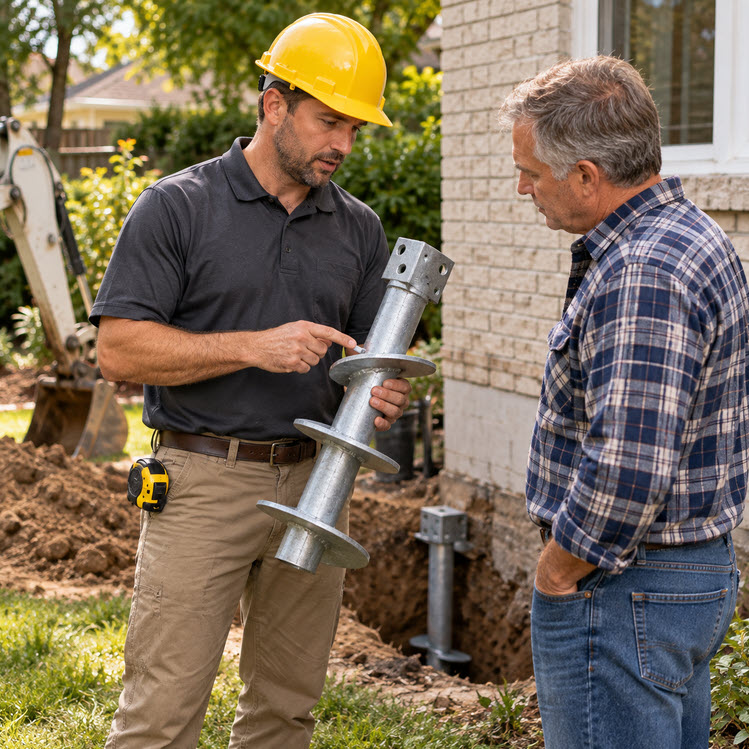
Instead of trying to fix the weak soil, piers go around it. Steel shafts with screw-like plates are turned deep into the ground until they reach soil that can carry the load, then bracketed to the footing. The weight of that part of the house moves onto the piers.
Piers aren't the right fix for every foundation, and we'll tell you when they aren't. When the soil near the surface simply can't hold the weight, though, piers are one of the most dependable ways to stop settling and keep it from coming back.
How Piers Work
Three Steps to a Stable Foundation
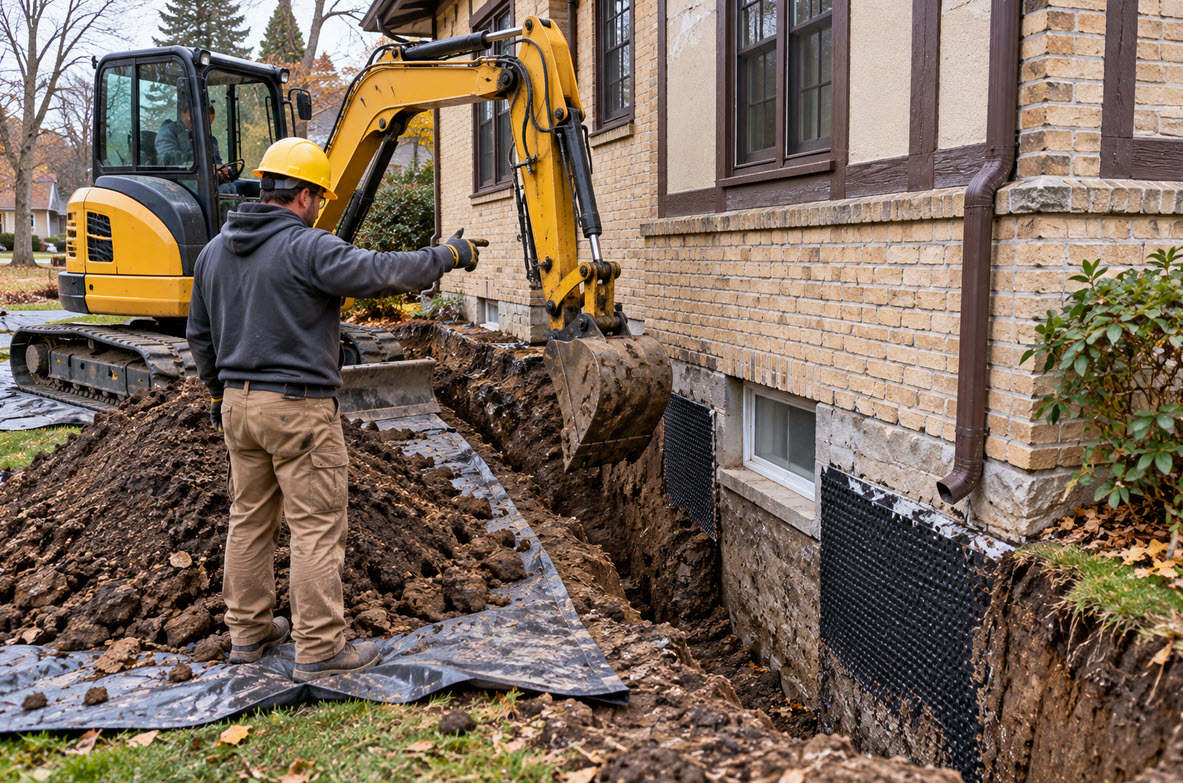
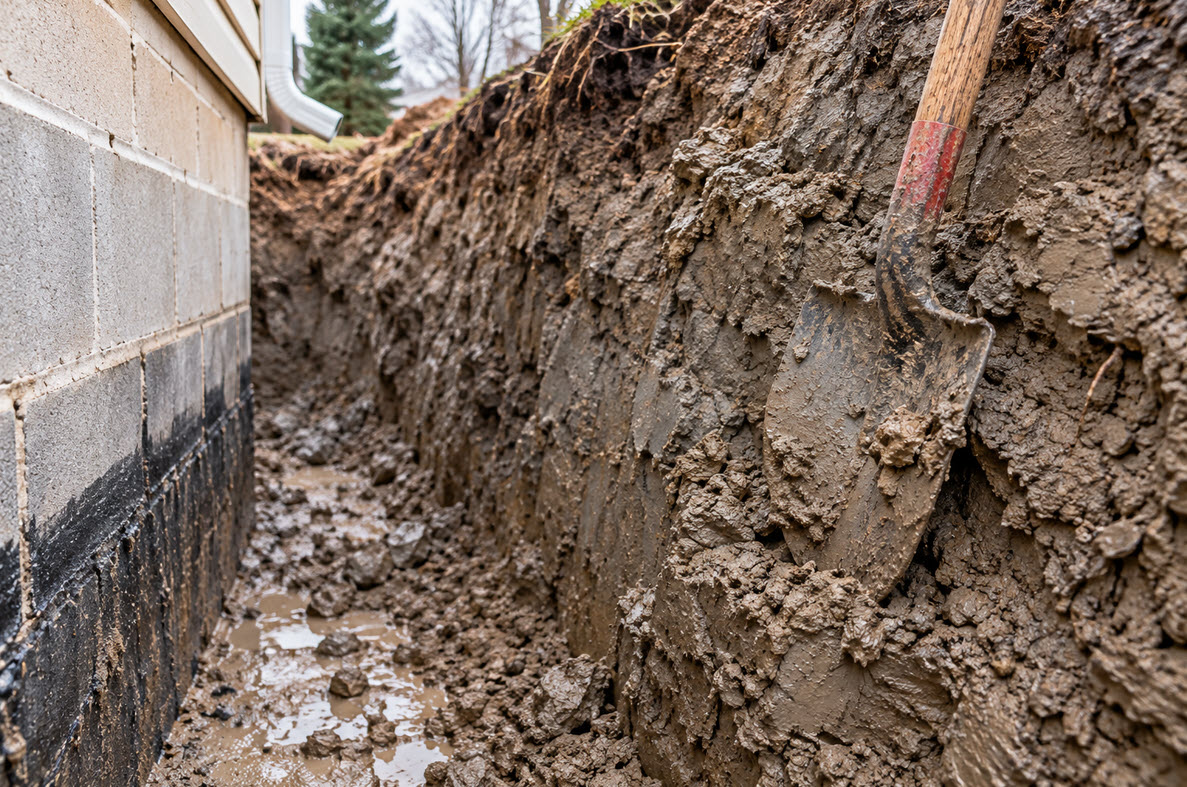
A small area is dug out next to the footing at each pier location.
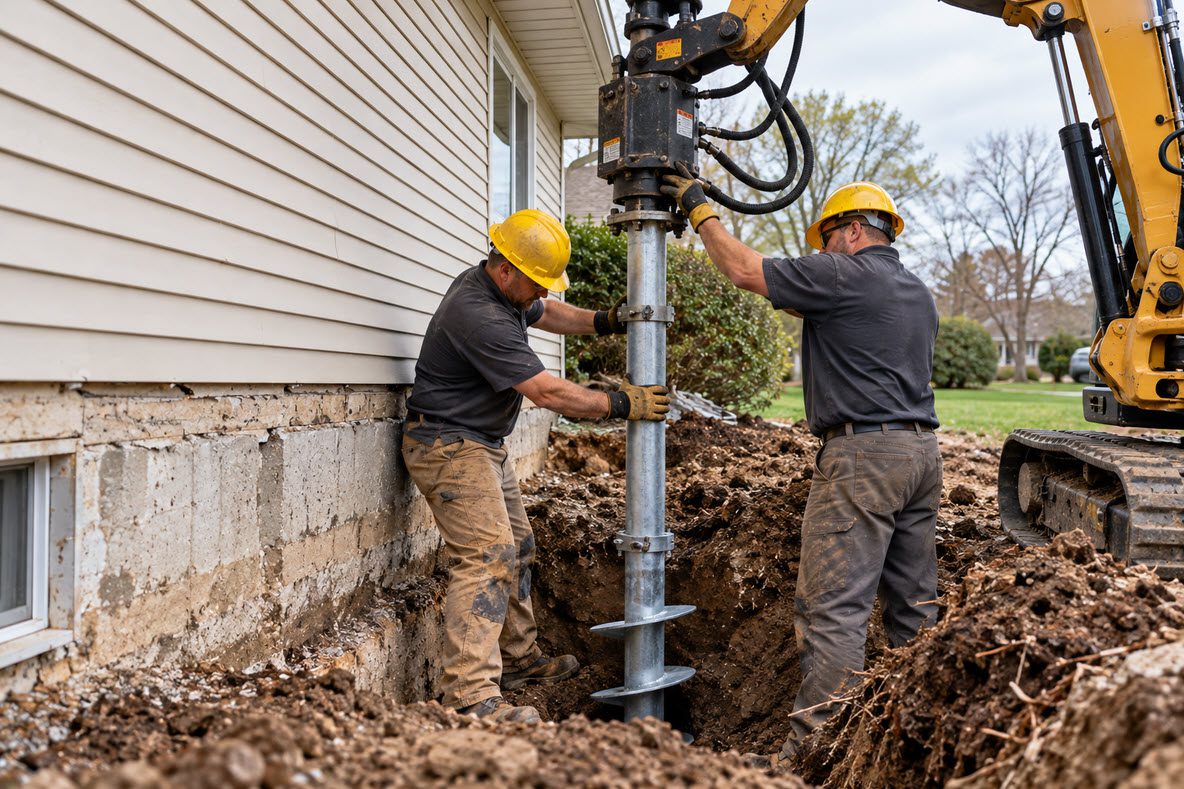
The pier is turned into the ground until it reaches soil firm enough to carry the load.
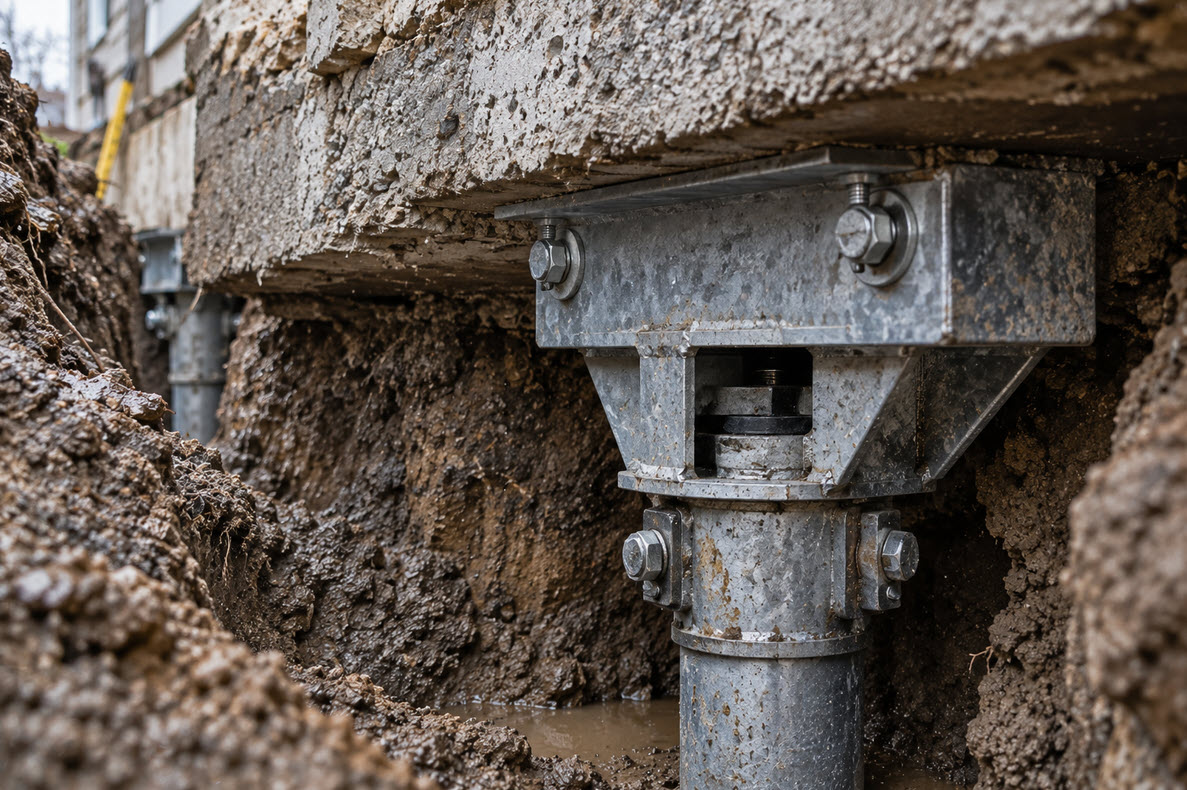
A steel bracket connects the pier to the footing, and the load moves onto the pier.
What Causes It
When Piers Are the Right Call
Piers aren't for every foundation. Here's when they make sense.
Warning Signs
Signs You May Need Stabilization
If you're seeing several of these, it's worth finding out whether the soil under your home is still moving.
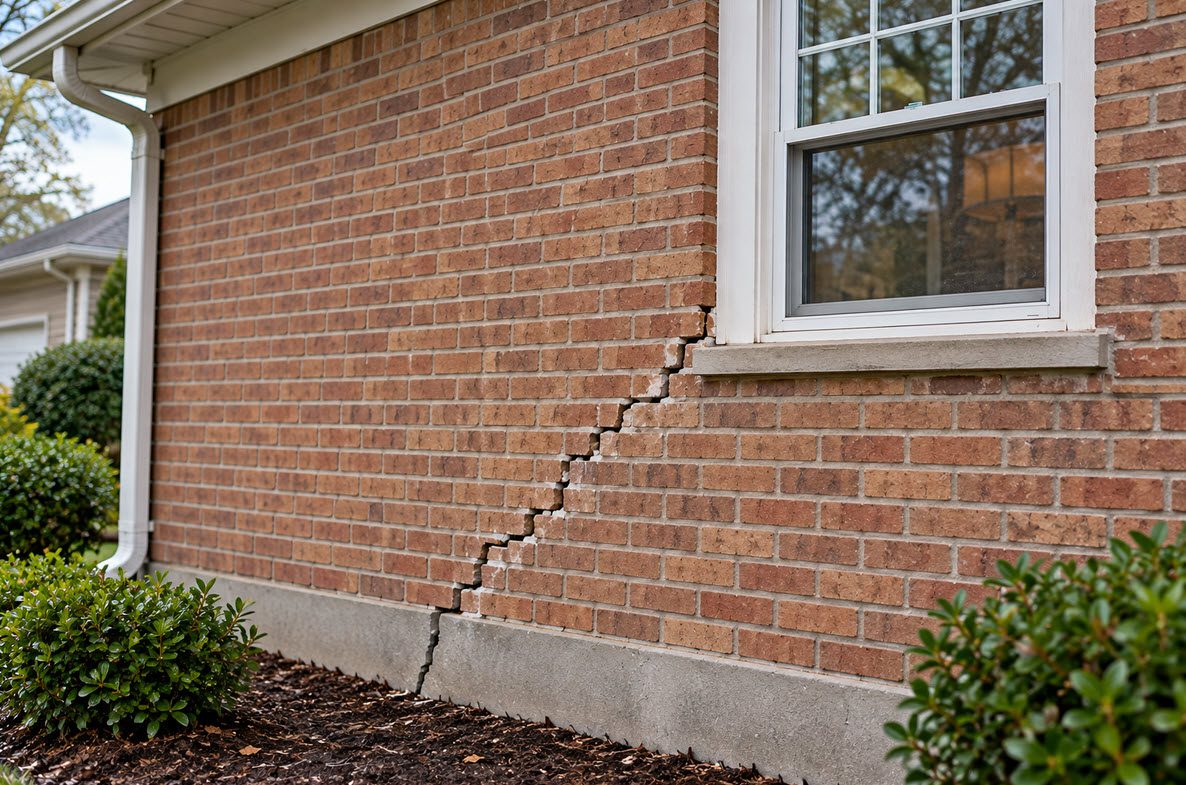
- Diagonal cracks that keep widening
- Doors and windows getting harder to close
- Floors sloping toward one corner
- An addition pulling away
- Gaps at brick, siding or chimney
- Cracks returning after repairs
- A chimney leaning away from the house
- Windows that won't stay open
How We Fix It
Stabilization Solutions
PiersHelical Piers for Settling Homes
Piers are installed along the settling section and spaced to share the load, each one driven until it reaches firm soil.
In some cases, piers can also help lift part of a foundation back toward level. We'll tell you what's realistic.
We space the piers so each one shares the load, then bracket them to the footing.
Settling Foundations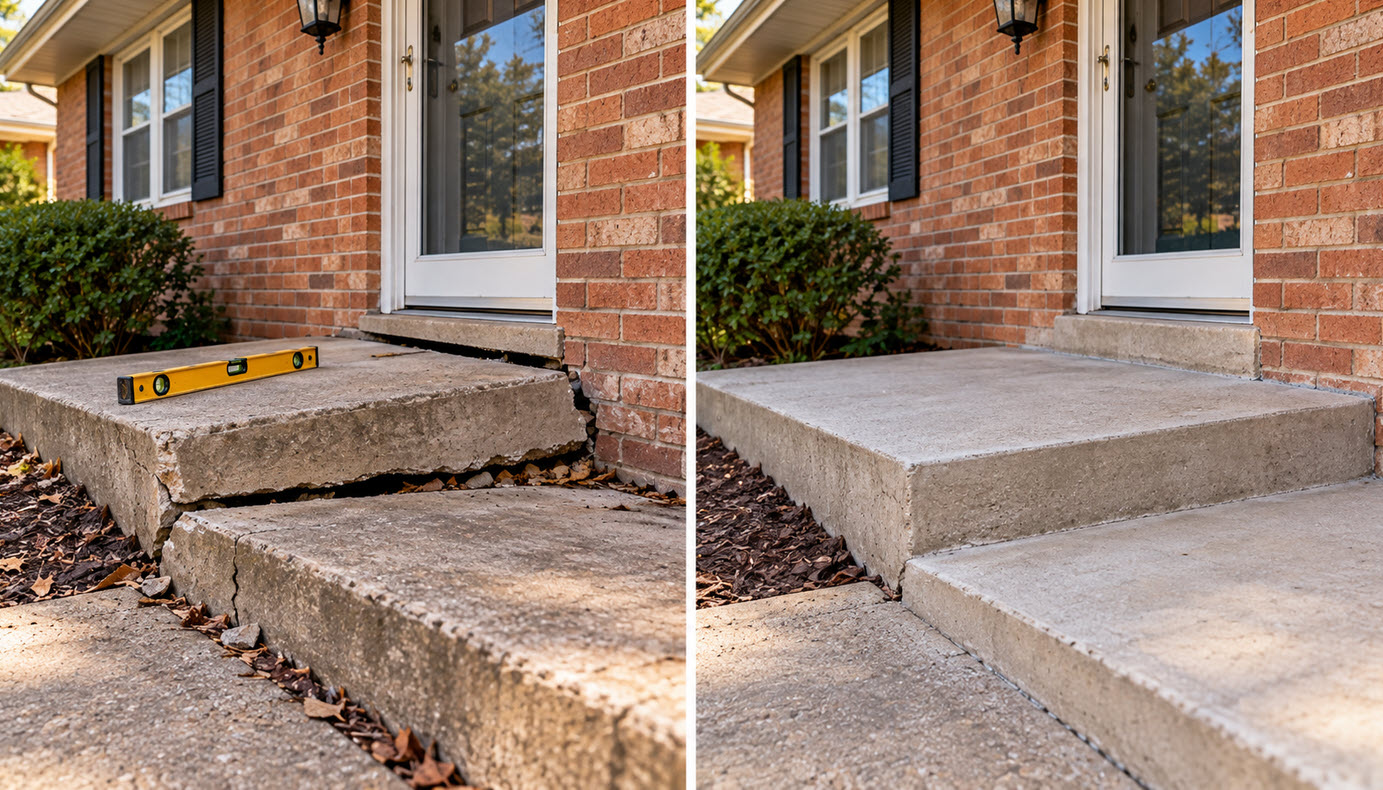 Additions
, Porches & Chimneys
Additions, porches and chimneys often sit on smaller footings and settle first.
Piers can support these sections on their own and keep them tied to the house.
Supporting these sections separately keeps them from dragging on the rest of the house.
Foundation RepairWhat to Expect
Our Stabilization Process
- 1InspectWe look at the settling, the cracks and the drainage.
- 2EvaluateWe decide whether piers are the right fix.
- 3InstallPiers are driven to firm soil and bracketed.
- 4VerifyWe check the results and restore the work area.
Common Questions
Helical Pier FAQs
What are helical piers?
Steel shafts with screw-like plates turned deep into the ground and bracketed to your footing.
How deep do they go?
As deep as needed to reach firm soil. That depth varies from home to home.
Can piers lift my house?
Sometimes. How much can be recovered depends on the home and how long it has been settling.
Will it tear up my yard?
Only small areas are dug at each pier, and the equipment is compact.
How long does it take?
Many pier projects take a few days. Your estimate includes a timeline.
Are piers permanent?
They're designed as a long-term fix, resting on soil below the frost zone.
What Homeowners Say
Trusted by Milwaukee-Area Homeowners

“We had Basement Specialists do foundation work for us, they were affordable, completed the work in a timely manner, and did a great job at cleanup. We even had some extra work done around the porch foundation which was reasonable and looks great. We would highly recommend them!!”
“We have used Basement Specialists a couple of times. They have been simply wonderful to work with. To start with, the office is responsive, and they were easy to schedule with. Dale showed up promptly…”
“Just had them do foundation work for us. They did a good job, they did put runners down. Even put some on the basement steps, even after I told them they didn't have to…”
Related Services
You May Also Need
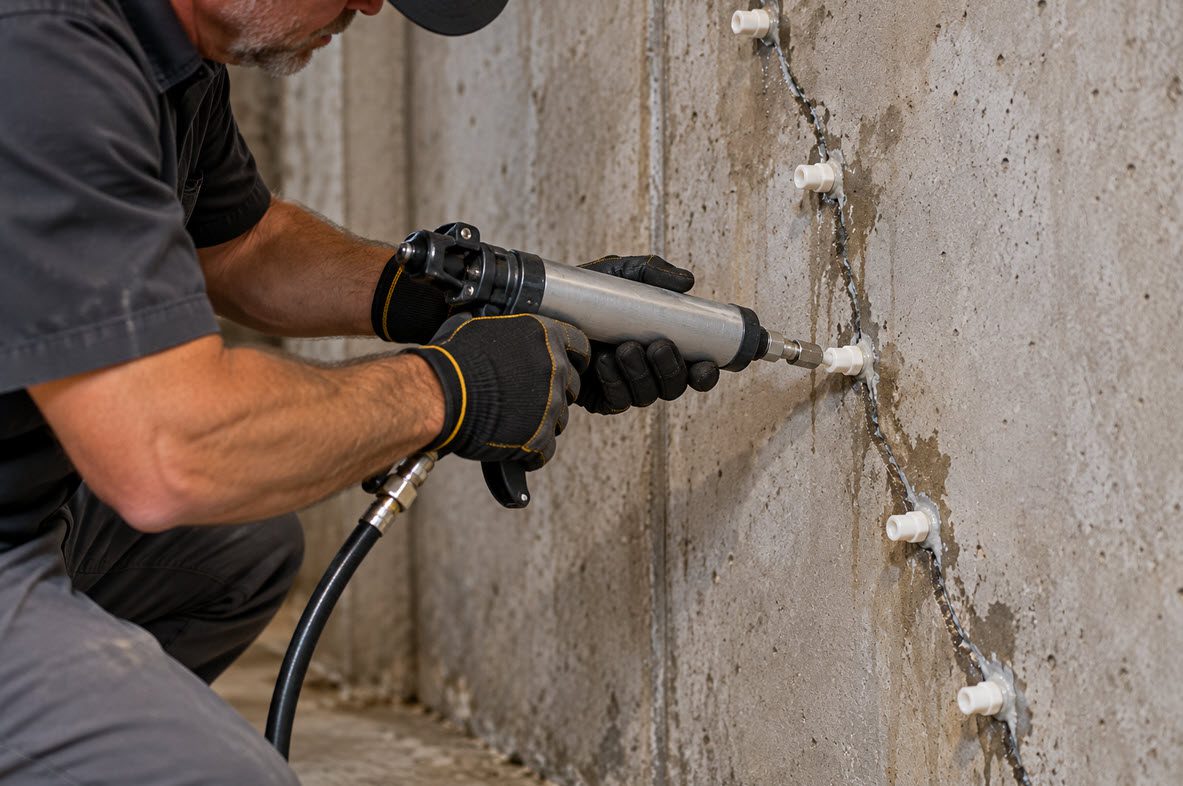 Foundation Cracks
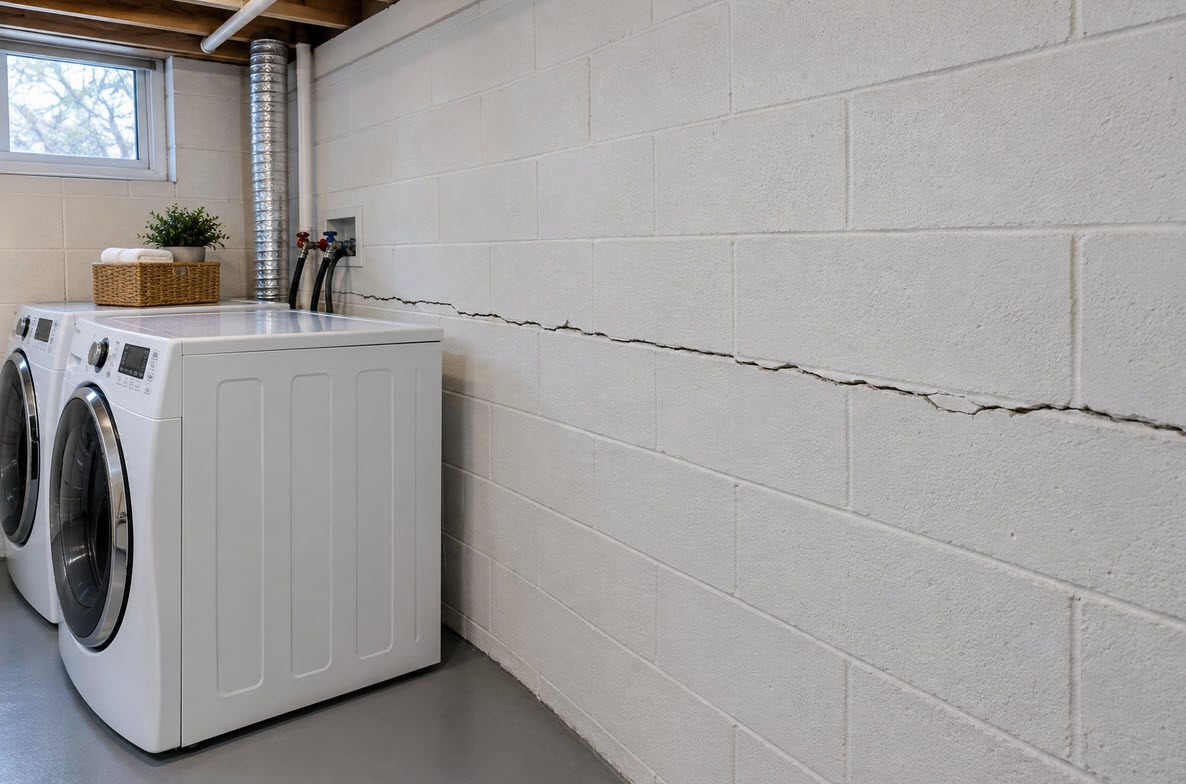 Bowing Walls
Is Your House Settling?
Let's Get It on Solid Ground.
We'll find out what's moving and give you a free written estimate.